🦞 Thenus australiensis
The Slipper Lobster Thenus australiensis (widely known as Moreton Bay Bug) is one of the few new species discovered in the Thenus spp. (Burton et al., 2007). The species is believed to be locally distributed across the coast of Australia.
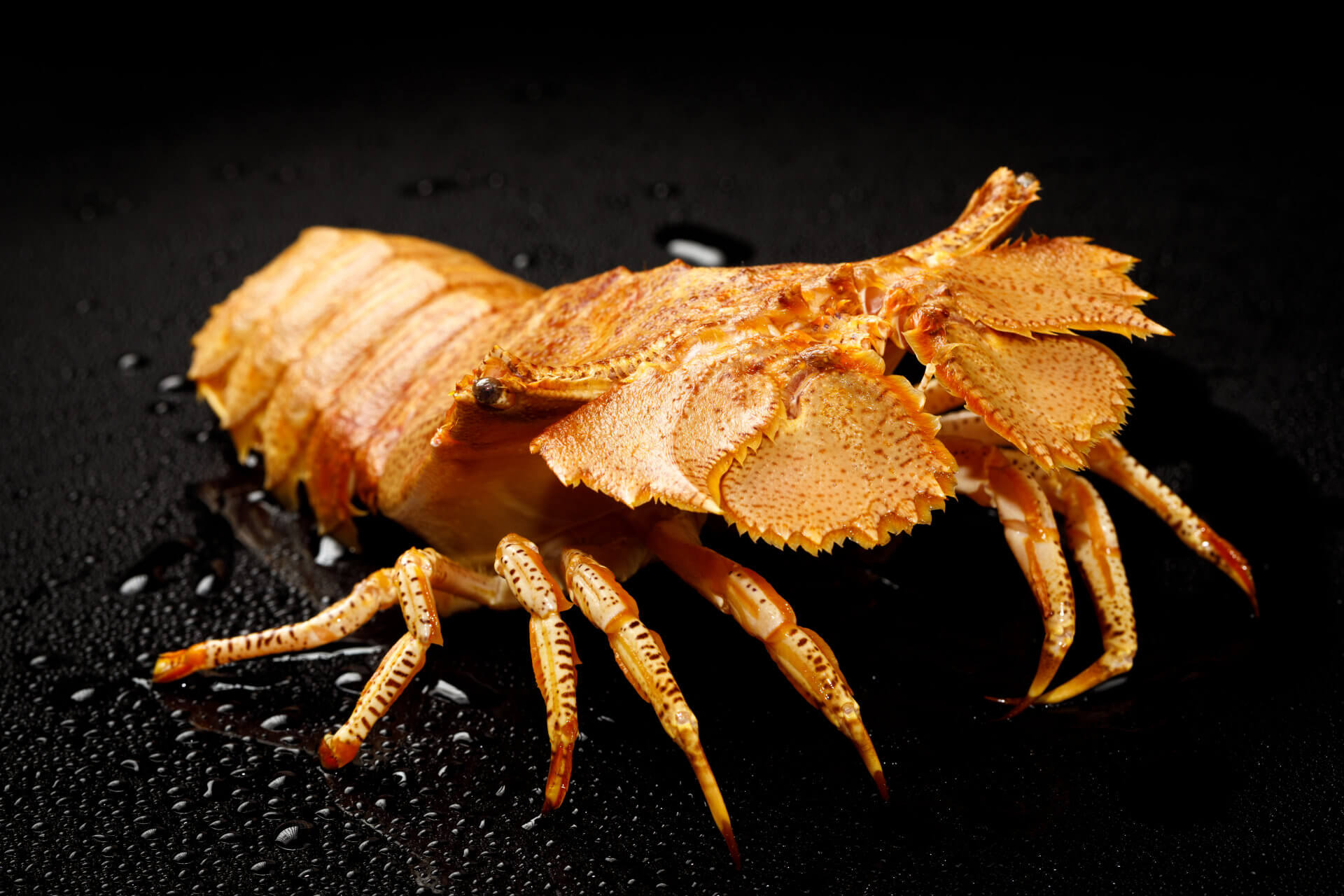
Slipper lobster (Thenus australiensis)
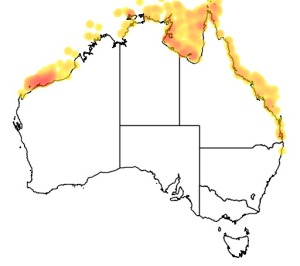
Distribution of T. australiensis across Australia
Image Source: Australian MuseumAccording to The State of Queensland, Department of Primary Industries, 2002, Thenus orientalis and Thenus australiensis are the largest among the Thenus spp. Furthermore, in Australia, it contributes significantly to the gross value of production (GVP) within the prawn trawl fisheries. The price of Balmain Bugs (another group of decapods) is not as high as Moreton Bay Bugs.
Morphologically, female organisms tend to be bigger in size (Mcmillan et al., 2023), meaning that to further improve the commercial benefit of the species, it is necessary to create a monosex population. According to Wang et al., 2024, the key to achieving a monosex population and many other applications to increase further commercial benefits (diagnosis of sex-specific diseases, etc.) is to study the transcriptomics.
🧬 Crustacean Sexual Development
In the decapods, sexual development undergoes three main steps: sexual determination, sex-specific differentiation, and ongoing maturation (Wang et al., 2014).
Firstly, sexual determination occurs via genetic (or environmental) mechanisms, which convert a chromosomal signal that triggers male or female phenotypic differentiation (sex-specific differentiation). After gaining differentiation in phenotype, sex-specific maturation occurs, which develops and maintains reproductive maturity, enabling reproductive functionality through behavioral, physiological, morphological, and anatomical changes.
Many pathways might affect the sexual development of decapod crustaceans. One of the most dominant pathways recorded is the regulation of insulin-like androgenic gland hormone (IAG); the more IAG is expressed in the organism, the greater the chance of that organism being male (Li et al., 2014). Interestingly, the IAG hormone in decapods is known to be mainly produced in the androgenic gland (AG), which is located along the sperm duct and testis (Charniaux-Cotton 1954; Sagi et al., 1997).
📖 How to Use the Web Atlas
This web-based tool provides a comprehensive tissue-specific and sex-specific gene expression profile for T. australiensis. The atlas is divided into 2 large sections: Tissue-Specific and Sex-Specific. Here is how to use it:
- Search & Filter: Use the search bar on either atlas page to find genes by ID, functional annotation, or specific tissue. Use the dropdown menus to isolate tissue-specific or sex-biased transcripts.
- Interactive Visualization: Clicking a row in the data table instantly generates a Plotly graph. Hover over data points to see exact mean expression values and standard errors (SEM).
- Local BLASTn Tool: Paste an unknown sequence into the BLASTn interface to find the closest matching Thenus transcript in our database. View the alignment scores natively in the browser.
- Comparative Genomics: On the Tissue Atlas, transcripts with a validated Homarus gammarus ortholog are marked with a lobster icon (🦞). Clicking these reveals a secondary boxplot showing how the gene is expressed in the European lobster.
📊 Data Sources & Availability
The Slipper Lobster Expression Atlas (SLEA) is built upon high-throughput RNA sequencing and comparative transcriptomic datasets.
Primary Dataset (T. australiensis)
The data driving this atlas originates from high-throughput RNA sequencing of Thenus australiensis. Tissues were harvested from biological replicates to capture a holistic view of the species' biology across both sexes.
Data Availability: All raw sequencing reads are publicly available in the NCBI Sequence Read Archive (SRA) under BioProject accession PRJNA772049.
Comparative Analysis (H. gammarus)
Furthermore, this atlas implements data from the LobsterGeneX Atlas to perform Orthology Comparative Analysis with Homarus gammarus.
The LobsterGeneX is a comprehensive gene expression atlas published by Paris et al. (2025).
Sample Properties:
| Tissue Name | Abbreviation | Replicates (Male) | Replicates (Female) | Sequencing Platform |
|---|---|---|---|---|
| Brain | BR | 2 | 2 | Illumina NovaSeq |
| Eyestalk | ES | 3 | 3 | Illumina NovaSeq |
| Gonad / Testis / Ovary | GN | 3 | 3 | Illumina NovaSeq |
| Heart | H | 2 | 2 | Illumina NovaSeq |
| Hepatopancreas | HP | 3 | 4 | Illumina NovaSeq |
| Muscle | MS | 2 | 2 | Illumina NovaSeq |
| Stomach | ST | 2 | 2 | Illumina NovaSeq |
| Walking Leg | WL | 1 | 2 | Illumina NovaSeq |